


London’s status as a magnet for international climate diplomacy has been reinforced this month, as a partnership between Türkiye and London Climate Action Week (LCAW) brings polar research and zero waste expertise into the capital’s growing network of climate events. For travellers tracking London’s calendar of major international gatherings, the development is another sign that the city is consolidating its position as a meeting point for policymakers, scientists and business leaders ahead of COP31.
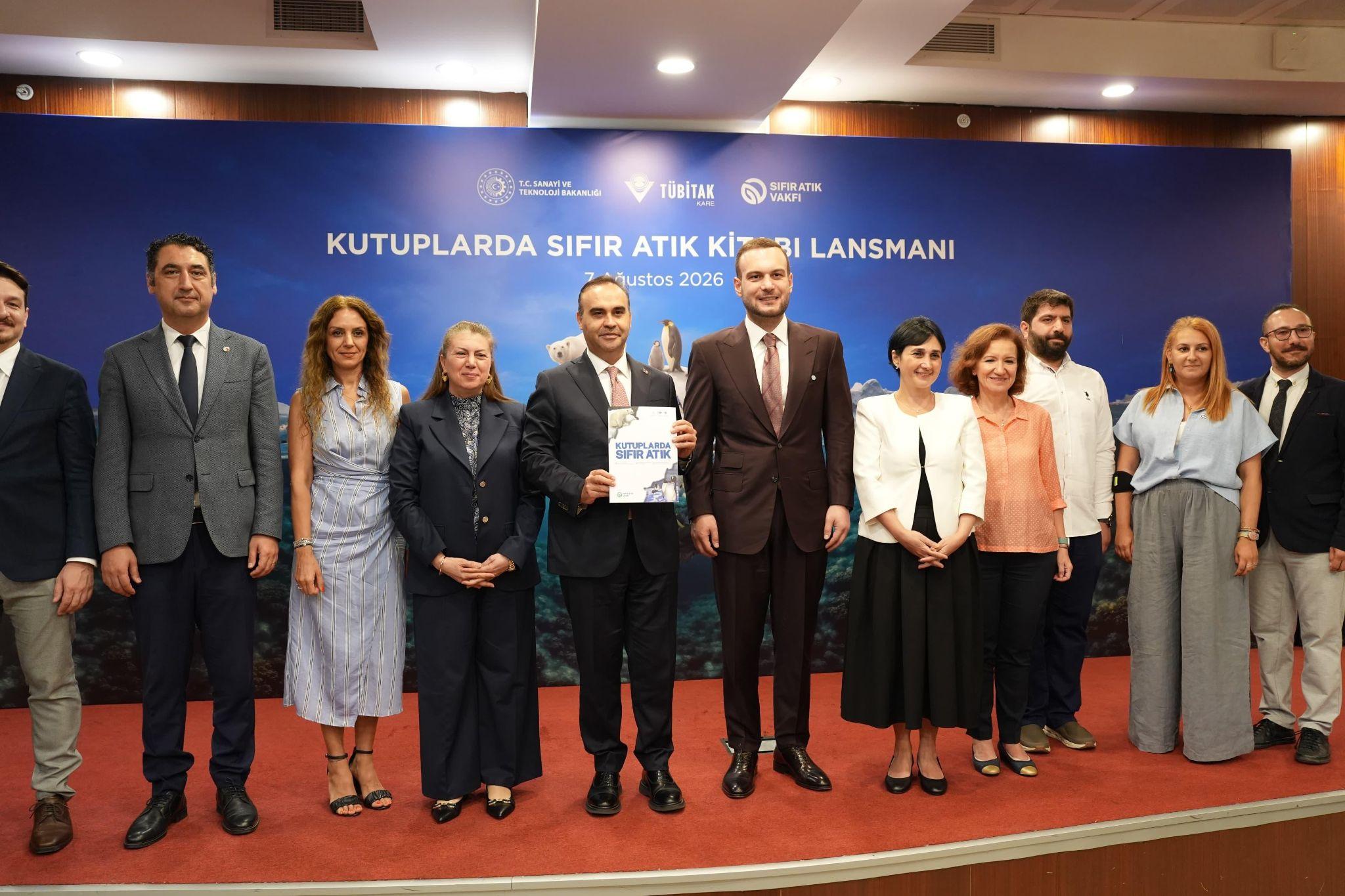
The agreement was signed on 17 August between The Zero Waste Foundation and LCAW, covering cooperation on climate action, zero waste and the circular economy. It followed the launch, ten days earlier, of a book titled “Zero Waste in the Polar Regions”, produced with TÜBİTAK’s (Scientific and Technological Research Council of Türkiye) Polar Research Institute. Together, the two moves link Türkiye’s Arctic and Antarctic research programme with London’s international climate ecosystem, at a moment when Türkiye is preparing to host COP31.
Why London Matters to the Story
London Climate Action Week draws participants from government, cities, business, finance, academia, civil society and local communities, making it one of the more significant fixtures on the international climate calendar for anyone who travels regularly for work in this sector. The new protocol with the Zero Waste Foundation gives Türkiye’s zero waste and circular economy experience a direct channel into that network, rather than treating the cooperation as a one-off event.
The protocol was signed by Samed Ağırbaş, President of the Zero Waste Foundation and COP31 High-Level Climate Champion, and Climate Action Founder and CEO Nick Henry. Ağırbaş said: “After this cooperation protocol, I hope we will carry out strong work and organize joint events at COP31 and London Climate Action Week.”
For those who follow London’s role as a host city, the comment points to further joint activity likely to draw delegations and specialists to the capital in the run-up to COP31, adding to the city’s packed schedule of international conferences and forums. The immediate focus, according to the organisations involved, remains practical exchange between the Foundation and the LCAW network, with COP31 providing the wider diplomatic backdrop rather than the sole purpose of the agreement.
The Polar Research Behind the Partnership
The cooperation with London builds on a body of scientific work that has taken Turkish researchers to some of the most remote destinations on the planet. The book “Zero Waste in the Polar Regions” examines climate change, environmental pollution and zero waste in the Arctic and Antarctic through scientific data, bringing together 18 articles by scientists who have conducted polar research. The contributions cover the scientific, technical, administrative and communication dimensions of applying zero waste principles in some of the harshest and most logistically demanding environments used for scientific travel and expedition work.
Rather than focusing solely on waste collection, the publication looks at how scientific activity in these regions is planned, how materials and resources are used, and how energy, water and logistics are managed during expeditions. The emphasis, notably for anyone interested in how remote research travel is organised, is on reducing waste before it is generated, using resources efficiently and limiting the environmental footprint of research missions to the poles.
The book also frames the polar regions as critical indicators of global climate change, arguing that environmental changes occurring there have consequences far beyond the Arctic and Antarctic themselves. That framing is intended to give the research relevance well beyond the geography in which it was conducted, connecting remote scientific fieldwork to the kind of climate policy discussions now taking shape in London and, eventually, at COP31.
Two National Programmes, One Publication
Mehmet Fatih Kacır, Minister of Industry and Technology of Türkiye, said the book brought together two major national initiatives that both began in 2017. “The Zero Waste initiative launched under the leadership of H.E. Emine Erdoğan has grown step by step from a national initiative into a global one,” he added.
He went on to describe how Türkiye’s polar science programme developed alongside the zero waste movement: “At the same time, we began organising scientific expeditions to Antarctica and the Arctic under the auspices of the President of the Republic of Türkiye, enabling Turkish scientists to strengthen the country’s presence in polar research. Through this book, these two initiatives have come together.”
The study also reflects the wider zero waste vision advanced by H.E. Emine Erdoğan, Founder of the Zero Waste Movement, Chair of the UN High-Level Advisory Board on Zero Waste and Honorary President of the Zero Waste Foundation. For readers who follow how national delegations build profile ahead of hosting major international gatherings, the combination of a scientific publication and a London-based partnership signals a coordinated approach to positioning Türkiye’s environmental credentials before COP31 convenes.
Taken together, the book launch and the LCAW protocol connect two distinct forms of travel and exchange: the specialist, logistically complex expeditions that take scientists to the Arctic and Antarctic, and the more familiar pattern of international conference travel that will bring policymakers and business figures to London and, later, to COP31 itself. Both strands are being presented as part of a single approach that treats zero waste as a matter of resource efficiency and circular economy thinking, rather than reducing the concept to recycling or waste management alone. For an audience that tracks how global events reshape travel patterns into and out of the UK capital, the coming months are likely to bring further detail on joint events planned around London Climate Action Week and COP31.
